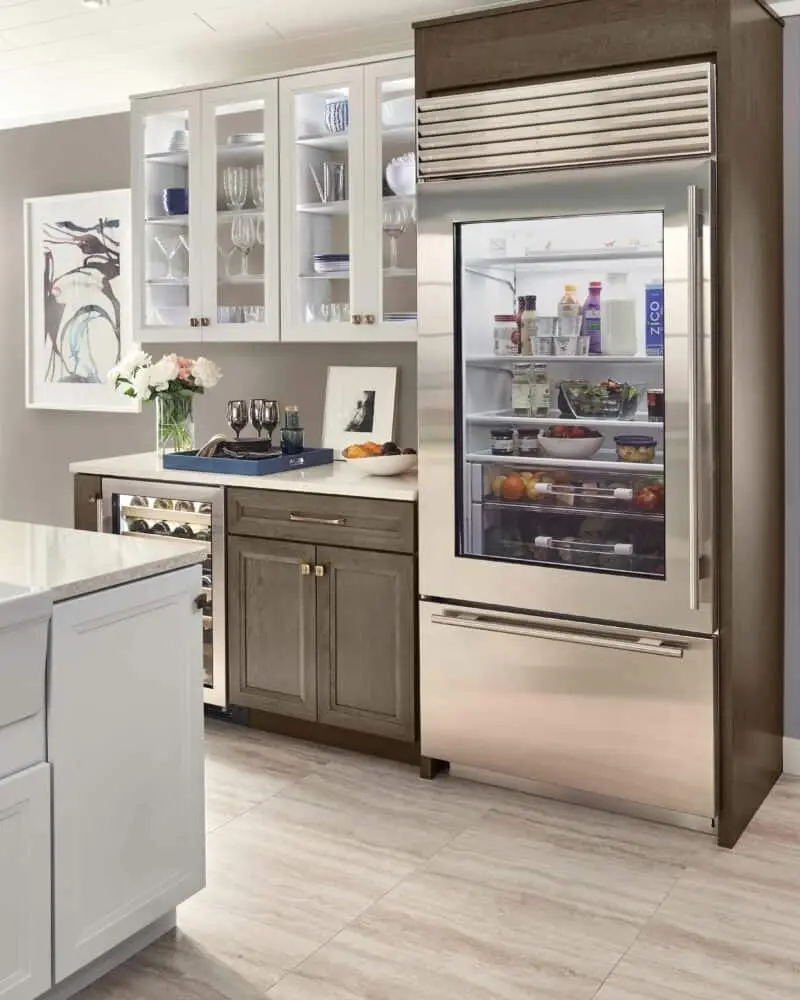
When a Sub-Zero refrigerator is warm but the freezer is still cold, the fault is almost always in the refrigerator side’s own cooling path. The usual causes are a stopped evaporator fan, a coil iced over by a failed defrost, or a sensor, board or compressor that serves only the fresh food section. Each of those is a repair. None of them means the unit has reached the end.
Below is how a Sub-Zero splits its cooling, what each cause looks like, and what you can safely check yourself. If you would rather have someone look at it today, call 818-855-7988. For everything else we repair on the brand, see our Sub-Zero repair page.
Why a Sub-Zero Refrigerator Runs Warm While the Freezer Stays Cold
Most built-in Sub-Zero refrigerators cool the two sections separately. Each side has its own evaporator coil, its own fan and its own temperature sensor. Many models give each side its own compressor too. The idea is to keep dry freezer air, and its odors, away from your produce.
That design is why the symptom splits so cleanly. A fault in the refrigerator’s circuit leaves the freezer untouched. A freezer still at zero also tells the technician the power supply and the house wiring are fine. Some refrigerators work differently: they cool both sections from one coil and push freezer air to the fresh food side through an air damper. On those, a stuck damper or a blocked duct gives the same symptom, so it gets checked first.
Cause One: The Evaporator Fan Has Stopped
A stopped fan is the cause we find most often. The coil behind the back panel can be ice cold, but without a fan moving air across it, the cold never reaches the shelves. The section may sound quieter than usual. You may also hear ticking or scraping where a fan blade is catching on ice.
The technician tests the motor for voltage and resistance before replacing it. Power present and no rotation means the motor has failed. No power means the control board is next, and that is a different part.
Cause Two: A Defrost Fault Has Iced Over the Coil
Every refrigerator coil collects frost and needs a way to clear it. On some models the fresh food coil defrosts by pausing the cooling while the fan blows cabinet air across it. On others a small heater does the job. If the fan stops, the heater burns out, the defrost thermostat fails or the board skips the cycle, frost builds until no air can pass.
Here is the tell. The section cools well for a day or two after a power cut, then slowly warms again. Switching the unit off melts the ice and buys time, but the ice returns until the failed part is replaced. The technician checks the heater, the thermostat and the board’s defrost timing. A blocked drain line that lets meltwater refreeze on the coil is on the list too.
Cause Three: A Sensor, the Board or the Sealed System
Each section has a thermistor, a small sensor the control board reads to decide when to cool. If the refrigerator sensor drifts and reports a colder number than the real one, the board stops calling for cooling. The fan and compressor sit idle while the shelves warm up. The technician uses the unit’s diagnostic mode to compare the sensor’s number with a probe thermometer.
On models with a separate refrigerator compressor, the last suspects are that compressor, its start relay and a slow refrigerant leak. A compressor that clicks on and off within seconds points to the relay or the compressor itself. Sealed system work is the biggest job on this list. It is still far less disruptive than replacing a built-in the cabinetry was made around.
Small Things to Rule Out First
Before you call, check the simple causes. A door blocked by a pan or a drawer lets warm air in all day. Run your hand around the door gasket and look for a torn corner or a stretch that has gone hard and stopped sealing. Make sure tall containers are not pressed against the vents at the back, and that nobody has bumped the temperature setting.
Look at the condenser behind the top grille as well. A dusty condenser usually warms both sections, so it is rarely the whole answer here. It does make every other fault worse, and Sub-Zero’s care guides call for cleaning it regularly.
Warm Refrigerator Symptoms We See Most Often
- Fresh food section in the high forties while the freezer holds zero
- No air coming from the vents at the back of the refrigerator
- Ticking or scraping from behind the back panel
- Frost on the back wall, or ice visible through the vent slots
- Water under the crisper drawers after the unit was switched off
- A display showing a normal temperature while a shelf thermometer reads warm
Tell us which of these you see when you call. It helps the technician bring the likely parts on the first visit.
Keeping Food Safe While You Wait
Put a thermometer on a middle shelf. The cold food storage chart on FoodSafety.gov says a refrigerator should hold 40 degrees or below and a freezer 0 degrees. If the fresh food side is above 40, move milk, meat, fish and leftovers into the freezer or a cooler. Keep the doors closed as much as you can. If something perishable sat warm for hours and you are unsure about it, throw it out.
What to Expect on Service Day
When you call, have the model and serial number ready. On most built-ins the tag is inside the refrigerator section near the top. The technician confirms the temperatures with a probe, reads the diagnostic mode and opens the back panel to look at the coil and the fan. You hear what failed and why, and you get the quote before any work starts. The inspection and the quote are free when you go ahead with the repair. Seniors, active military and veterans get a discount.
Fan motors, sensors and most defrost parts ride on the truck, so many of these repairs finish the same visit. A coil packed with ice has to be melted out before the repair can be tested, which adds time. Compressor work is booked as a separate visit, with the floor and cabinet faces covered if the unit has to come forward.
Why Choose Us for Sub-Zero Refrigerator Repair
- Certified technicians who work on Sub-Zero built-ins, columns and undercounter units.
- Genuine Sub-Zero parts, fitted by the technician who found the fault.
- Same-day appointments where the schedule allows, and we are open 6 AM to 10 PM every day.
- Affordable, reasonably priced repairs, explained in plain words first.
- Family-owned since 1980, with technicians on the road across Los Angeles every day.
Frequently Asked Questions
Why is my Sub-Zero refrigerator warm but the freezer is cold?
The two sections cool separately, so a fault in the refrigerator’s own fan, defrost system, sensor or compressor warms that side alone. A stopped evaporator fan is the most common cause. An iced-over coil from a defrost fault comes next.
Can I reset my Sub-Zero to fix it?
Switching it off for a day melts an iced coil, and the refrigerator often cools again for a while. If a defrost part or the fan has failed, the ice comes back within days. Treat a reset as a way to protect the food, not as the repair.
Is it the compressor?
Usually not. On two-compressor models the refrigerator compressor can fail on its own, but a fan, a defrost part or a sensor is far more likely. The technician rules those out with a meter before anyone talks about sealed system work.
Is an older Sub-Zero worth repairing?
In most cases, yes. A built-in Sub-Zero is designed to be serviced for many years, and the parts behind this symptom are still made for most models. If yours is not worth fixing, the technician tells you why before quoting.
Do you repair other built-in refrigerators?
Yes. Thermador, Viking, Miele, Dacor and Liebherr built-ins show the same symptom for the same reasons. Our refrigerator repair service covers every major brand.
Contact Us for Sub-Zero Refrigerator Repair in Los Angeles
If your Sub-Zero refrigerator is warm and the freezer is still cold, call 818-855-7988 and tell us the model and what the thermometer reads. We repair Sub-Zero refrigerators in Beverly Hills, Bel Air, Brentwood, Santa Monica and Malibu, in Encino, Sherman Oaks and Calabasas, and out to Ventura County and the Orange County coast.